

Read the Full Article on Commercial Observer - Click Here
New York City’s rent-regulated housing system is approaching a structural breaking point. The issue is not ideological — it is mathematical. When operating costs consistently rise faster than allowable rent increases, net operating income compresses, reinvestment slows, and long-term building stability deteriorates.
According to Robert Knakal, the growing distress in rent-stabilized housing stems from a widening imbalance between regulated revenue and real-world expenses — a gap that recent policies have significantly intensified.
Rent regulation aims to preserve affordability — a legitimate and important goal. However, affordability cannot be sustained if the revenue side of the equation remains constrained while operating and capital costs grow at market rates.
When reinvestment is no longer financially viable:
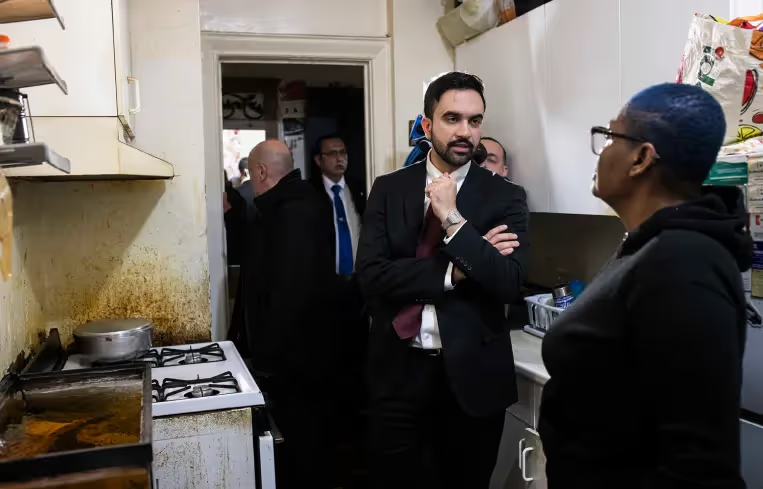
The long-term risk is not theoretical. It is the gradual physical deterioration of the very housing stock the policy is designed to protect.
Unless policy evolves to restore a realistic pathway for cost recovery and capital reinvestment, the system will continue to experience increasing financial distress, shrinking improvement activity, and widening gaps between expenses and regulated revenue.
Good intentions alone cannot override economic fundamentals. Sustainable housing policy must account for both tenant affordability and the mathematical realities of building operations.
Because allowable rent increases have lagged behind rising operating expenses such as taxes, insurance, labor, utilities, and compliance costs.
HSTPA significantly limited MCI and IAI programs, reducing the financial incentives that historically enabled owners to renovate and modernize aging buildings.
In many cases, renovation costs exceed the future rental income allowed under current regulations, making reinvestment economically unfeasible.
While intended to support affordability, a multi-year rent freeze during expense inflation would likely deepen financial stress and accelerate deferred maintenance.
Ownership structure alone does not resolve the revenue-expense imbalance; sustainable operations still require sufficient cash flow to maintain and improve buildings.

Get tailored industry and listing news, Map Room, and Bob Knakal's insights in your inbox!

Follow us on


