

Buildings Sold

Total Building Sales

Total Square Feet Sold

NYC CRE Market Expertise



Photo Credit: Foster + Partners via AP

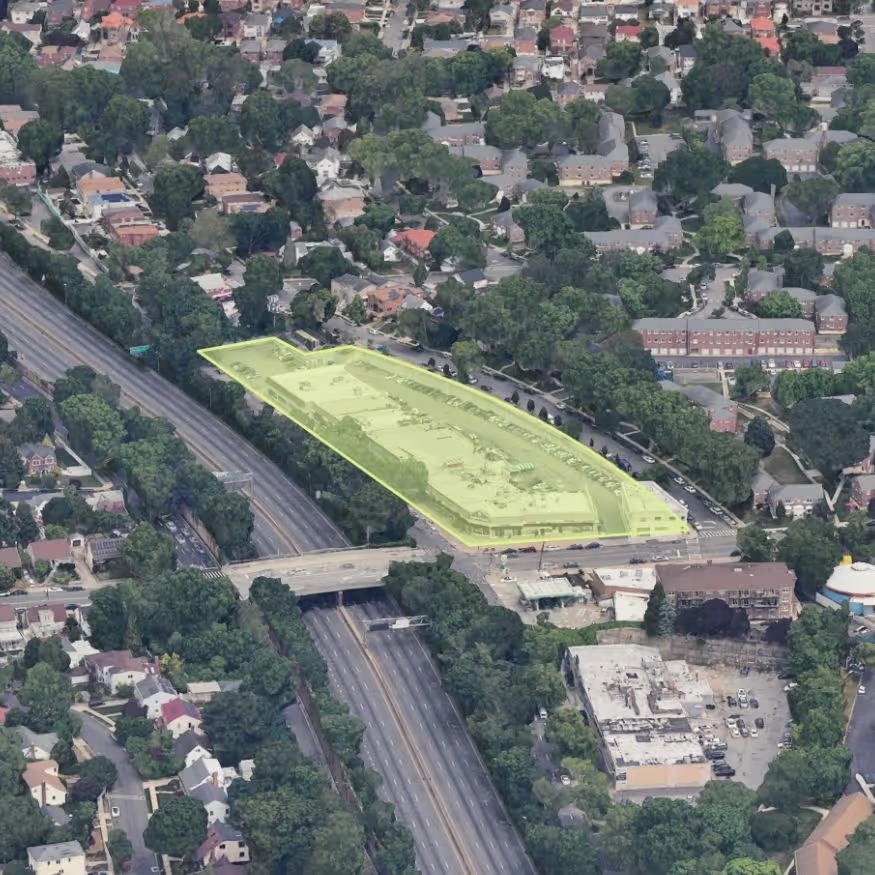
Photo Credit: YIMBY

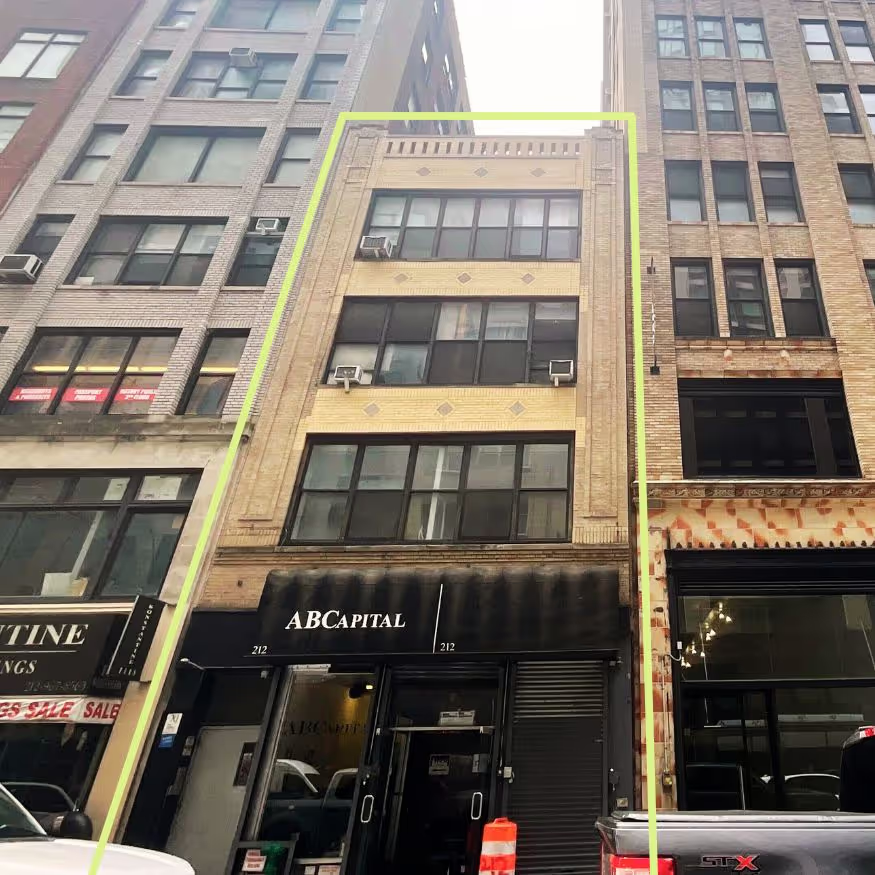
Photo Credit: YIMBY


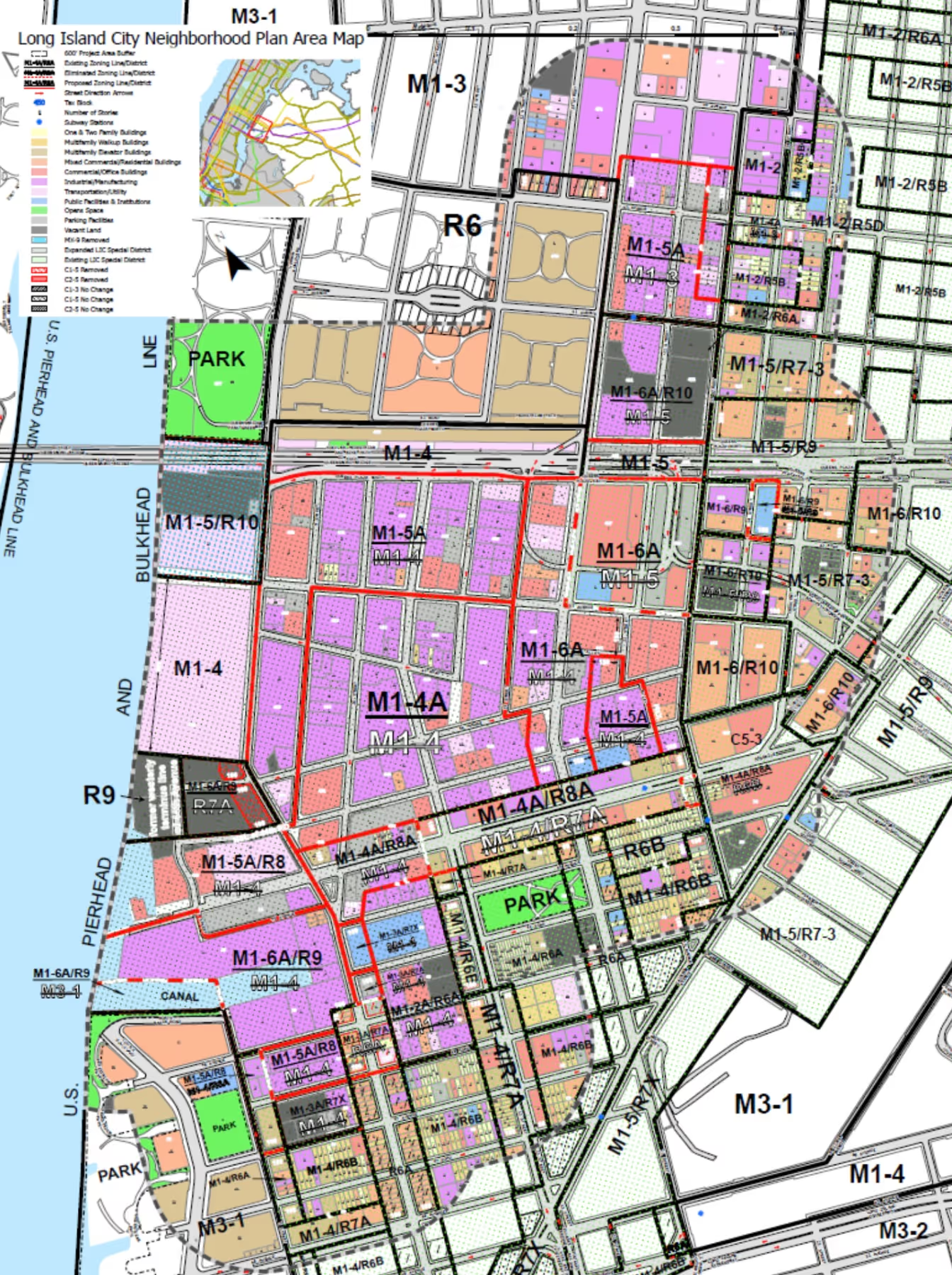
Photo Credit: NYC Dept. of City Planning
%20-%20Vetoed%20Video.gif)







For over four decades, Bob Knakal has stood out in commercial real estate not just for extraordinary production, but for sustained excellence, strategic innovation, and culture-building. Recognized by The CIO Today as “Best in Class” in commercial real estate, Knakal’s career blends unmatched transaction success with a deep commitment to mentorship, data mastery, and long-term client service.
Across an illustrious career, Knakal has sold thousands of buildings in the world’s most challenging real estate market — New York City — and today leads a new era of brokerage that combines traditional expertise with modern analytics and strategic focus.
Being recognized as Best in Class goes beyond numbers. It means not just dominating a market — but defining how that dominance is achieved:
In Knakal’s view, deals are transactions — but credibility is equity.
He combines decades of top-tier performance with disciplined market mastery, innovation, and mentorship — setting industry standards that outlast individual transactions.
It highlights Knakal’s disciplined work ethic, strategic innovation (like territorial specialization), data mastery, and leadership culture.
He pioneered systems — like geographic specialization — that shifted how brokerage firms operate and trained hundreds of brokers who now lead major firms worldwide.
Knakal combines deep historical market knowledge with advanced analytics and a commitment to client service, mentorship, and long-term strategy.

Now in its ninth year, the Inclusion in CRE Scholarship program aims to build a pipeline of talented young professionals for development and operations roles in commercial real estate by connecting rising leaders with seasoned mentors and expanding their industry expertise.
As a scholarship recipient, Genessy will have the opportunity to pursue the NAIOP Certificate of Advanced Study in Commercial Real Estate Development, participate in high-impact educational programming, and deepen professional relationships through industry events and mentorship.
Genessy currently serves as Managing Director at BKREA, where she focuses on development site and air rights sales in Manhattan, working closely with the firm’s Chairman & CEO. Prior to this role, she built a strong foundation in retail investment sales and leasing with CrossMarc Services, representing clients throughout the Southeast, and began her career at Marcus & Millichap in Nashville, gaining experience across office and industrial asset classes.
Fluent in both English and Spanish, Genessy holds active real estate licenses in Florida, Tennessee, and New York, and earned a Business Management degree from the University of Central Florida.
Genessy’s leadership extends beyond her day-to-day work; she has been recognized for her contributions to commercial real estate discourse, including serving as Chair of NAIOP NYC Metro’s Developing Leaders Committee and being honored as a Next Generation Award recipient for her impact on development site sales and air rights transactions in Manhattan.
The NAIOP New York City Metro Chapter applauds Genessy Jaramillo on this well-deserved achievement and looks forward to her continued contributions to the CRE community.

Bob Knakal, Chairman & CEO of BKREA and one of commercial real estate’s most respected industry leaders, recently led an exclusive Lunch & Learn session with brokers at Lee & Associates, focused on brokerage best practices, professional development, and long-term performance strategies.
The interactive event brought together Lee & Associates professionals for a candid discussion on performance habits, relationship-building, and the mindset required to excel in today’s competitive commercial real estate environment.
Drawing from more than four decades of experience and over 2,391 completed transactions totaling $24.1 billion, Knakal shared practical insights into:
The Lunch & Learn format encouraged open dialogue, allowing brokers to exchange ideas and ask candid questions about navigating market cycles, sharpening competitive positioning, and building durable professional brands.
Knakal emphasized that success in brokerage is not accidental — it is the result of structured habits, disciplined prospecting, and continuous learning. He encouraged attendees to operate with both entrepreneurial independence and collaborative awareness, aligning personal performance with team growth.
The session was arranged by Todd Korren, Principal and Executive Managing Director at Lee & Associates. Korren, who previously worked alongside Knakal at Massey Knakal Realty Services, has maintained a close professional relationship with him over the years.
“We’re thrilled to have Bob, a legend in our industry, come speak with our team to talk about best practices for brokers to utilize to maximize their potential,” said Korren.
The event reflects Lee & Associates’ ongoing commitment to broker education and performance elevation. By providing direct access to industry leaders like Knakal, the firm reinforces a culture of continuous improvement, mentorship, and strategic growth.
For Knakal, the opportunity to share insights with the next generation of brokerage professionals reinforces a long-standing belief: elite performance in commercial real estate is built on consistency, preparation, and an unwavering commitment to client service.
Bob Knakal, Chairman & CEO of BKREA, led the session with brokers at Lee & Associates.
The discussion centered on brokerage best practices, professional discipline, relationship-building, and strategies for maximizing long-term career growth.
Todd Korren, Principal and Executive Managing Director at Lee & Associates, coordinated the session.
They provide brokers with direct access to industry leaders, actionable insights, and collaborative dialogue that enhances performance and market expertise.
Some leaders don’t just follow the market — they anticipate cycles, understand buyer behavior, and leverage timing with precision. Bob Knakal, Chairman & CEO of BKREA, has redefined commercial real estate advisory by turning a “mile wide, inch deep” approach into a focused, relationship-driven model. With over four decades of experience and more than 2,391 properties sold totaling $24.1 billion, Knakal’s philosophy centers on trust, discipline, and delivering clarity in complexity.
Bob Knakal demonstrates that success in commercial real estate comes from combining human insight with structured intelligence. By emphasizing specialization, data interpretation, and proactive advisory, BKREA helps clients make informed decisions even in volatile or opaque markets. Depth over breadth, clarity over volume, and preparation over assumption define this next-generation brokerage model.
BKREA focuses on development, redevelopment, and owner-user building transactions, particularly in vacant properties where strategic insight creates value.
The firm integrates proprietary analytics, AI, and historical transaction data to identify buyer behavior, pricing sensitivity, and the highest and best use of properties.
With $24.1B in transactions over 40+ years, Knakal combines deep market knowledge, strategic foresight, and client-focused execution to redefine brokerage.
Through mentorship, specialized tools, data insights, and a culture of accountability, BKREA enables brokers to grow faster and deliver superior client outcomes.
A market recalibration in NYC where certain sectors’ pricing per square foot has reverted to levels not seen in decades, creating unique buying and development opportunities.

Knakal joined the class virtually during Lehigh’s weekly Wednesday program, where industry professionals are invited to share their career journeys and answer student questions in real time. The program is designed to expose students to real-world perspectives and provide direct access to leaders across commercial real estate and related fields.
During his session, Knakal discussed his path in the industry, the importance of building relationships, and how young professionals can position themselves for long-term success through discipline, curiosity, and consistent networking. Students engaged actively, asking thoughtful questions about entrepreneurship, market cycles, and career development.
"Whenever I speak to college students, I am delighted to see so much interest in the commercial real estate industry from so many young people. The future of the industry is in good hands if the Lehigh students are any indication", stated Mr. Knakal.
About the company: BKREA is a New York City–based commercial real estate brokerage and advisory firm specializing in investment sales across select urban submarkets. Led by Chairman & CEO Bob Knakal, the firm combines deep market expertise, proprietary research, and a relationship-driven approach to help property owners maximize value and execute strategic transactions.

Knakal addressed students participating in Pace’s sales coaching program, where he works closely with faculty and staff to help prepare students for real-world careers. During the session, he shared firsthand insights from his decades-long career, emphasizing the importance of prospecting, networking, discipline, and relationship-building, all foundational skills that translate across industries but are especially critical in commercial real estate.
“We have one of the best teams in the city, and our students are learning essential skills like prospecting and networking to become truly job-ready,” said Pace leadership following the event. “We’re also seeing an exciting trend that more students are expressing strong interest in entrepreneurship and the real estate market.”
Bob Knakal encouraged students to think entrepreneurially, remain curious, and approach every interaction as an opportunity to learn and grow. He also discussed the evolving landscape of commercial real estate and how young professionals can position themselves for long-term success by building strong habits early in their careers.
The visit resonated deeply with students, many of whom stayed afterward to ask questions and discuss career paths. Several students shared that they had begun reading Knakal’s book and expressed appreciation for his candid advice and approachable mentorship style.
“It’s inspiring to see students so energized about entrepreneurship and real estate,” Knakal said. “These conversations are important, and I’m grateful for the opportunity to be part of their journey.”
Knakal’s visit reflects Pace University’s continued commitment to providing students with access to industry leaders and practical experiences that bridge the gap between classroom learning and professional success.

For decades, global brokerage firms have marketed their international office networks as a competitive advantage when selling New York City investment properties. The pitch is familiar: global reach brings global capital.
But according to Robert Knakal — who has brokered the sale of 2,391 NYC properties over 42 years — the data tells a very different story. In practice, international footprints rarely drive actual buyers, particularly in the highly specialized world of development site sales.
New York City is one of the most complex real estate markets in the world. Sophisticated foreign capital often participates behind the scenes, but acquisitions and execution are almost always led by experienced local developers.
Even trophy development sites — including the 2025 sale of the Spitzer site at Fifth Avenue and 62nd Street — ultimately transact with local developers deeply rooted in the market.
The conclusion is clear:
Global branding may sound powerful, but local specialization closes deals.
According to Knakal, true advantage in New York City investment brokerage comes from:
A firm may have offices in 100 countries. But if none of those offices produce a single buyer — or a single offer out of 9,146 — scale becomes narrative, not substance.
Yes. Foreign capital actively invests in New York City, but transactions are typically executed through local operators, attorneys, and acquisition teams — not through foreign brokerage offices.
Serious investors are already embedded in NYC’s local ecosystem. They track opportunities directly and maintain relationships with credible local listing brokers.
Yes. Development land requires zoning expertise, entitlement strategy, and local execution knowledge — making hyper-local experience essential.
Specialization, proprietary data, local credibility, and structured competitive processes consistently outperform broad global branding.
It reflects the number of offers submitted across 538 transactions during Knakal’s time at global firms — none of which originated from international offices.

The traditional volume-driven brokerage model is becoming obsolete, according to Bob Knakal, whose career includes the sale of 2,391 properties totaling approximately $24.1 billion in transaction volume.
Knakal, founder of BKREA, says the industry’s long-standing formula (more calls, more listings, more activity) no longer delivers the strategic clarity that modern property owners and institutional investors demand.
“For decades, brokerage has been built around volume,” Bob Knakal said. “More pitches. More listings. More transactions. But today, data wins. Intelligence wins. Precision wins. The firms that survive will be the ones that understand that.”
BKREA was built around that premise. Rather than operating as a broad generalist platform, the firm emphasizes hyper-specialization within defined geographies and asset classes, supported by proprietary analytics and artificial intelligence tools.
Central to the strategy is the Knakal Land Index, a proprietary research initiative that tracks land pricing trends, development velocity, and valuation shifts across submarkets. The Index analyzes over 2,444 development site sales in Manhattan going back to 1984. By integrating historical transaction data with zoning intelligence and forward-looking analytics, BKREA aims to provide timing strategy, not just transaction execution.
As capital markets tighten and investors demand greater transparency, advisory expectations are shifting. Clients increasingly expect brokers to provide structured data insight, regulatory analysis, and predictive modeling rather than relying solely on comparable sales and relationship-driven negotiations.
“The difference today is that owners have access to information,” Knakal said. “What they need is interpretation. Where is policy shifting? Where is capital flowing? Where is the value about to move? That’s the advisory role.”
BKREA has also implemented specialized teams focused on zoning, policy, and development feasibility, internally referred to as the “BKREA Policy & Zoning SWAT Team”, which is designed to uncover hidden value and strategic leverage points before assets reach the market. This puts them in a position to make more informed decisions which leads to maximized values.
Industry observers note that while brokerage has historically been slow to adopt technological innovation, firms that integrate AI-driven research and structured market analytics are gaining competitive advantages, particularly in high-density urban markets.
With more than 40 years of experience in investment sales, Knakal says the goal is not to replace brokerage relationships, but to elevate them.
“Technology doesn’t eliminate brokerage,” he said. “It sharpens it. The future of brokerage isn’t about who makes the most calls. It’s about who understands the market the deepest.”
As institutional and private capital becomes more selective and development cycles grow more complex, BKREA’s data-forward model reflects a broader evolution in how investment sales advisory services are delivered.

When The Executive Lens (February 2026 edition) named Bob Knakal one of the “Emerging Icons: Most Impactful Business Personalities in 2026,” it recognized more than longevity — it acknowledged transformation.
With over four decades in New York City commercial real estate and 2,388 buildings sold totaling more than $24 billion in transactions, Knakal has not only shaped the market — he has reshaped how brokerage leadership is defined in a data-driven era.
He was recognized for combining a 40-year track record of high-volume success with modern intelligence systems, AI integration, and a specialized brokerage model that disrupts traditional industry norms.
He has sold 2,388 buildings across New York City, totaling over $24 billion in transactions.
His model integrates proprietary research systems, data analytics, and highest-and-best-use advisory strategies to maximize value for clients.
Through thousands of transactions and market-shaping advisory work, he has influenced land values, development trends, and capital allocation decisions citywide.
Knakal bridges legacy experience with AI-driven intelligence, positioning him at the forefront of modern commercial real estate advisory.

New York City’s rent-regulated housing system is approaching a structural breaking point. The issue is not ideological — it is mathematical. When operating costs consistently rise faster than allowable rent increases, net operating income compresses, reinvestment slows, and long-term building stability deteriorates.
According to Robert Knakal, the growing distress in rent-stabilized housing stems from a widening imbalance between regulated revenue and real-world expenses — a gap that recent policies have significantly intensified.
Rent regulation aims to preserve affordability — a legitimate and important goal. However, affordability cannot be sustained if the revenue side of the equation remains constrained while operating and capital costs grow at market rates.
When reinvestment is no longer financially viable:
The long-term risk is not theoretical. It is the gradual physical deterioration of the very housing stock the policy is designed to protect.
Unless policy evolves to restore a realistic pathway for cost recovery and capital reinvestment, the system will continue to experience increasing financial distress, shrinking improvement activity, and widening gaps between expenses and regulated revenue.
Good intentions alone cannot override economic fundamentals. Sustainable housing policy must account for both tenant affordability and the mathematical realities of building operations.
Because allowable rent increases have lagged behind rising operating expenses such as taxes, insurance, labor, utilities, and compliance costs.
HSTPA significantly limited MCI and IAI programs, reducing the financial incentives that historically enabled owners to renovate and modernize aging buildings.
In many cases, renovation costs exceed the future rental income allowed under current regulations, making reinvestment economically unfeasible.
While intended to support affordability, a multi-year rent freeze during expense inflation would likely deepen financial stress and accelerate deferred maintenance.
Ownership structure alone does not resolve the revenue-expense imbalance; sustainable operations still require sufficient cash flow to maintain and improve buildings.
New York City’s rent-regulated housing system is approaching a structural breaking point. The issue is not ideological — it is mathematical. When operating costs consistently rise faster than allowable rent increases, net operating income compresses, reinvestment slows, and long-term building stability deteriorates.
According to Robert Knakal, the growing distress in rent-stabilized housing stems from a widening imbalance between regulated revenue and real-world expenses — a gap that recent policies have significantly intensified.
Rent regulation aims to preserve affordability — a legitimate and important goal. However, affordability cannot be sustained if the revenue side of the equation remains constrained while operating and capital costs grow at market rates.
When reinvestment is no longer financially viable:
The long-term risk is not theoretical. It is the gradual physical deterioration of the very housing stock the policy is designed to protect.
Unless policy evolves to restore a realistic pathway for cost recovery and capital reinvestment, the system will continue to experience increasing financial distress, shrinking improvement activity, and widening gaps between expenses and regulated revenue.
Good intentions alone cannot override economic fundamentals. Sustainable housing policy must account for both tenant affordability and the mathematical realities of building operations.
Because allowable rent increases have lagged behind rising operating expenses such as taxes, insurance, labor, utilities, and compliance costs.
HSTPA significantly limited MCI and IAI programs, reducing the financial incentives that historically enabled owners to renovate and modernize aging buildings.
In many cases, renovation costs exceed the future rental income allowed under current regulations, making reinvestment economically unfeasible.
While intended to support affordability, a multi-year rent freeze during expense inflation would likely deepen financial stress and accelerate deferred maintenance.
Ownership structure alone does not resolve the revenue-expense imbalance; sustainable operations still require sufficient cash flow to maintain and improve buildings.
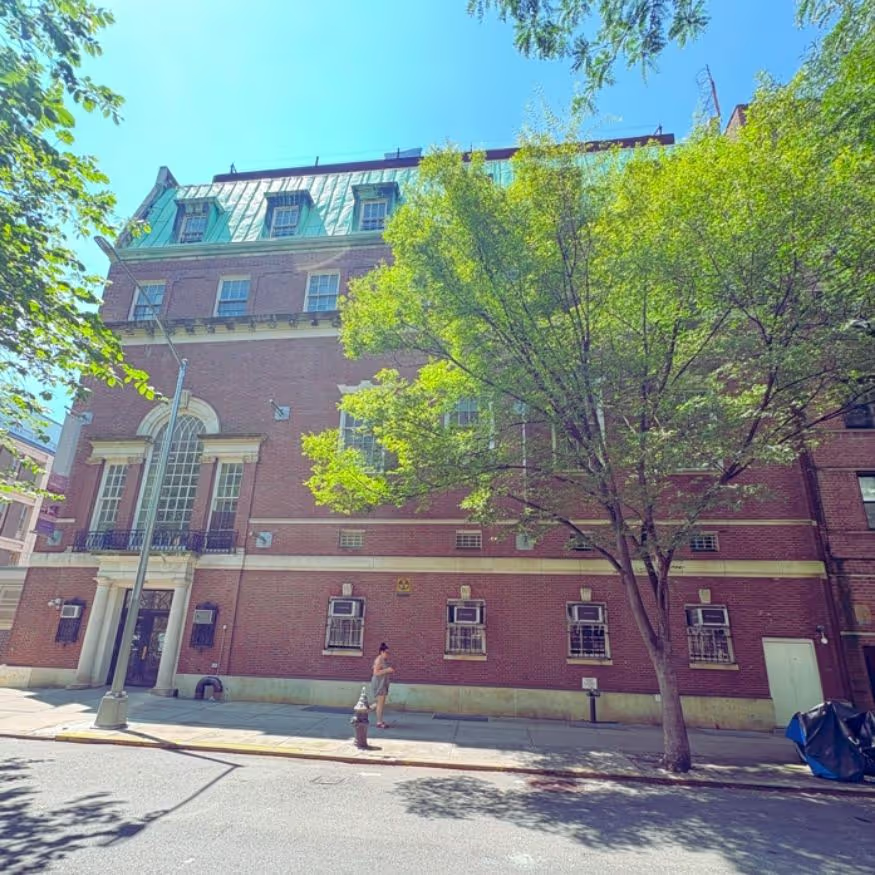
Positioned mid-block on the south side of West 85th Street between Amsterdam and Columbus Avenues, the property sits within one of New York City’s most established and supply-constrained neighborhoods. The building totals approximately 38,838 square feet across six stories, including a full basement and mezzanine, on an irregular 6,575-square-foot lot with 75 feet of frontage.
Formerly occupied by the Manhattan Country School, the property is now delivered vacant, presenting a clean canvas for an owner-user or an investor seeking a unique redevelopment or conversion opportunity. Zoned R8B, the site allows for residential and community facility uses, offering flexibility for a wide range of potential executions including educational institutions, religious organizations, foreign government uses, and other community-oriented occupancies. The current Certificate of Occupancy is for school use, which is the most difficult use to get in New York City which is a big advantage for an educational institution.
While the existing building exceeds current allowable zoning floor area, BKREA’s Policy and Zoning SWAT Team has assembled additional analysis outlining potential paths forward for redevelopment or conversion, subject to buyer due diligence and approvals.
The property benefits from exceptional light and air due to its mid-block positioning and adjacency to the neighboring Louis D. Brandeis High School — a rare characteristic for Upper West Side assets of this scale. Its prime location provides immediate access to Central Park, Riverside Park, major retail corridors, and robust transportation options, including the 1, B, and C subway lines and multiple bus routes.
Notably, the asset is being sold by a federal court-appointed trustee, ensuring the sale will be delivered free and clear of all liens, claims, and encumbrances, offering buyers one of the cleanest title opportunities currently available in the marketplace.
“Opportunities to acquire a vacant, institutional-scale building in the core of the Upper West Side are extraordinarily rare,” said Bob Knakal, Chairman & CEO of BKREA. “150 West 85th Street offers scale, frontage, light, and location, combined with immediate usability and long-term optionality, making it one of the most compelling user opportunities we’ve seen in Manhattan in recent years.”

The discussion focused on practical strategies for managing risk, preserving value, and positioning assets for opportunity during periods of market volatility. Panelists shared real-world insights on underwriting discipline, legal and environmental preparedness, tax and accounting strategy, documentation, title integrity, and market sentiment across asset classes.
“Periods of uncertainty do not eliminate opportunity,” said Bob Knakal. “They reward preparation, discipline, and clarity of execution. This panel brought together exceptional women who are actively advising clients through complex transactions and who understand where deals succeed, where they break down, and how owners can position themselves to move quickly when conditions shift.”
The panel featured a diverse group of industry leaders, including:
Elizabeth Roy, Lender who discussed how lenders have adjusted underwriting standards in response to volatility, how risk is evaluated today, and what distinguishes borrowers who successfully close deals when capital is constrained.
Janet Stelz, Environmental Consultant, who addressed how environmental risks are amplified during distressed transactions, which due diligence steps should never be skipped, and how proactive environmental planning can protect value and create competitive advantages.
Alicia Mynarska, Accountant, who highlighted commonly overlooked accounting and tax strategies during uncertain cycles, emphasizing the importance of liquidity management, depreciation planning, Opportunity Zones, and the impact of recent tax legislation on long-term holding and exit strategies.
Faith Miros, Attorney, who focused on internal legal readiness and its direct effect on speed, leverage, and valuation. She emphasized that downturns reveal documentation weaknesses rather than create them, and that clean, current records are critical to maintaining negotiating strength.
Genessy Jaramillo, Broker, who shared observations on shifting market sentiment, early signs of opportunity across asset classes, and how local political and zoning factors influence pricing and demand.
Nicolette Sinatra, Title Expert, who underscored the importance of clean title and strong documentation during market disruptions, common title issues that arise in stressed deals, and proactive steps owners can take to avoid surprises when refinancing or selling.
Throughout the panel, speakers challenged the misconception that uncertainty should halt market engagement. Instead, they emphasized preparedness, strong advisory teams, disciplined due diligence, and clean documentation as essential tools for navigating volatility and capitalizing on future opportunities.
Bob Knakal was proud to moderate such an esteemed panel of commercial real estate women. “Women are among the very top professionals in our industry and have been for many years. However, they are disproportionately underrepresented in our market”, stated Knakal, who added, “At BKREA, we are doing all we can to find, train, promote, inspire and support the next generation of female leaders in commercial real estate.”

Hosted inside the historic property itself, the intimate event brought together top brokers, investors, and industry professionals for a rare opportunity to tour the building while gaining firsthand insights from two of the most influential voices in commercial and residential real estate. The conversation explored the story behind the building, current market conditions, and what lies ahead for New York City real estate.
Built in 1905, 35 East 62nd Street sits on a 40’ x 100’ lot and spans approximately 25,000 square feet across five stories, including a full basement, mezzanine, and rooftop loggia. The property is zoned to allow both residential and commercial use as of right, offering exceptional flexibility for a range of potential users.
Currently configured for office use, the building features an expansive double-height entrance lobby, a mezzanine creative studio, and a 40’ x 20’ boardroom with 16-foot ceilings. High-ceilinged upper floors provide abundant light & air and are designed to adapt to a variety of needs, including high-tech offices, hedge funds, family offices, foundations, or boutique headquarters.
The property also presents a rare opportunity for residential conversion, with the potential to become a grand single-family mansion, a European-style family compound, or a luxury live/work residence. Additional highlights include 40 feet of street frontage, an elevator, a glass-enclosed rear yard, and an outdoor rooftop garden.
Situated between Park and Madison Avenues, the property benefits from strong neighborhood demand, proximity to Central Park, and immediate access to world-class dining, retail, and transportation.
“It is always great to collaborate with my good friend and residential real estate genius, Ryan Serhant. Our event gave attendees a great market overview and an intimate introduction to one of the great historic buildings in Manhattan that we currently have on the market for sale”, stated Bob Knakal, chairman & CEO of BKREA.
About the company: BKREA is redefining commercial investment sales by combining decades of market expertise with cutting-edge technology and artificial intelligence. Led by Bob Knakal, who has brokered investment property sales since 1984, the firm has completed 2,391 transactions totaling approximately $24.1 billion, among the highest totals ever achieved by an individual broker. BKREA leverages data, media, and AI to deliver faster insight, broader reach, and superior outcomes for clients in a rapidly evolving real estate landscape.


Following the Federal Reserve’s decision to hold rates steady—and growing speculation around a leadership transition from Jerome Powell to Kevin Warsh—many in commercial real estate are betting that sharply lower interest rates are just around the corner. This belief has led buyers to wait on the sidelines and sellers to delay transactions in hopes of a return to peak valuations.
That expectation is misplaced. Long-term market fundamentals, historical data, and capital flows suggest that the ultra-low rate environment of the post-GFC era was an anomaly—not a baseline that will soon return.
For buyers, waiting for dramatically cheaper debt risks missing opportunities that emerge during periods of market transition. Transactions occur when expectations realign—not when rates return to historic lows.
For sellers, holding assets in the hope that declining rates will magically restore 2015-era valuations can be equally risky. In many cases, liquidity and clarity today may outweigh uncertainty tomorrow.
Markets do not need perfect rate environments to function. They need realism, transparency, and aligned expectations.
At BKREA, strategy is grounded in long-term data, not short-term hope. While interest rates may drift modestly lower over time, a return to 2% Treasuries or 3% mortgage coupons would require a severe global shock. Building a business plan around that assumption is not prudent.
The market will move forward. Those who accept reality—and act accordingly—will be best positioned when transaction velocity normalizes.
They may edge modestly lower, but history and macroeconomic conditions do not support a return to ultra-low long-term rates.
Because most commercial real estate financing is priced off long-term Treasury yields, which reflect broader economic forces beyond short-term monetary decisions.
No. Values can improve through income growth, improved fundamentals, and renewed capital flows—even without dramatically lower rates.
In markets like New York City, current pricing dislocations and pent-up demand suggest compelling opportunities for disciplined buyers.
Waiting for a rate environment that is unlikely to return instead of adjusting underwriting and strategy to today’s realities.

The New York real estate industry exuded upbeat energy not only about returning to the newly restored art deco Waldorf Astoria hotel for its biggest night of the year. Property professionals are also feeling positive about the prospects in 2026 for an office market that has been steadily building momentum.
The trade group Real Estate Board of New York held its 130th annual confab Thursday night, and attendees were willing to discuss challenges facing the city, particularly housing. But some of those mingling at the gathering linked the reopening of the historic hotel to New York’s larger comeback in the wake of the pandemic, particularly added office demand.
Returning to the Waldorf, said Tom Bow, executive vice president of commercial leasing for The Durst Organization, “feels like business as usual.”
The black-tie-optional gala brought together 1,100-plus industry, government and other attendees to honor eight people, including GFP Real Estate Chairman Jeff Gural, one of the owners of the restored Flatiron Building.
While New York Gov. Kathy Hochul and some city deputy mayors and commissioners were present, newly sworn-in Mayor Zohran Mamdani was absent; past mayors more often than not have been known to appear.
But Mamdani had proposed broad rent stabilization and some tax hikes during the campaign before he took office Jan. 1, positions that sparked concern among the local real estate industry. Mamdani’s press team didn’t immediately respond to a CoStar News request seeking comment on why he didn’t attend.
Even with the mayor's missed opportunity for a little bridge building, James Whelan, REBNY’s president, said he wasn’t concerned by Mamdani’s absence: “His team was here. He’s got a lot to do. There’s always next year. … The biggest priority, we shared it with the mayor, is the housing situation. We need to create more housing in this town.”
While Mamdani has taken some steps such as addressing whether some city-owned property can be turned into housing, Whelan said the “one area of disagreement” the industry has with his administration centers on the pitch to freeze rent on about 1 million rent-stabilized apartments for four years.
“Rent-stabilized and rent-control housing is dead,” Bob Knakal, who has been ranked over the years as among the biggest sellers of commercial real estate in New York, told CoStar News. “You may as well just consider those million apartments as not even existing. … We don’t know if people who are getting protected under rent control and rent stabilization even deserve to be. ... We have to do something with the nonstabilized and noncontrolled housing, and the best way to do that is by building more new buildings.”
Still, against any uncertainty about how the real estate industry’s dance will go with the new mayor, professionals overall said their outlook on the market is positive.
“I’m very optimistic about 2026,” Knakal said, adding Manhattan last year had 691 buildings sold, which he said was a 2.5% turnover rate. “We have been at or below trend turnover for seven years in a row. That’s never happened before. There is pent-up demand to sell, and that the market is poised for a huge run-up in activity and in property value."
He added that "Values are too low. Turnover is too low. It has to change. It will change. I think 2026 is going to be the beginning of that. … Every property type is performing differently, but in our largest sectors, which are our apartment buildings and office buildings, values have been so depressed that they have nowhere to go but up.”
James Nelson, New York-based head of U.S. investment sales at real estate services firm Avison Young, said 2025 was an “incredible” year for dealmaking in both New York and across the country.
“What was really driving that was office here in New York City,” he said in an interview, adding almost half of the investment sales dollar volume in the city last year came from office properties. “When there’s more office demand, you have more demand for apartments, more demand for retail.”
GFP’s Gural said his company is “in good shape” when it comes to office leasing, adding, “Most of our buildings are full.” The property owner also is undertaking some office-to-residential conversions.
“Right now, business is fine, but you know, that could change any time,” he said. “I’d like to see interest rates lower.”
Bow at Durst, whose portfolio includes One World Trade Center in lower Manhattan, described 2025 as “the turning point” when it comes to office leasing in the city.
“The market will continue to improve and go up,” he said. “I don’t see anything turning it back. I see the high end of the market … continuing to perform very well.”
As supply for high-end office stock tightens, rent is also headed up, Bow said, adding that Durst's office tower at 825 Third Ave. has increased rents to $110 a foot at the top of the renovated building.
Top-dollar office leases jumped to record highs last year in Manhattan, a study by real estate services firm JLL found. New York was shown to have closed 2025 with its best office leasing volume since at least 2019.
Office “is coming back,” said former Silverstein CEO Marty Burger, who recently started a venture with L&L Holding Co. Chairman and CEO David Levinson to pursue development, buying and financing opportunities.
“It’s strong in New York. There’s been a huge surge in office leasing. Even the B buildings are getting used to that. It’s the obsolete buildings that need to be converted that just don’t lend themselves to be office buildings. And of course, there’s always a need for residential housing.”
Leslie Harwood, a managing director at Newmark, described “the pulse of the market” in New York as “very exciting right now, because the flight to quality is like something we’ve never seen.”
She added that “if you’re looking for Class A space in New York, it’s very difficult to find. As the Class A space is being eaten up … so B-plus or A-minus spaces are now renting as well. And as the footprint expands, the market gets stronger.”

Selling, managing, or repositioning a commercial property is rarely straightforward—especially in uncertain markets where incomplete information can lead to costly mistakes. Pricing errors, overlooked risks, and delayed decisions often prevent owners from realizing full value.
Bob Knakal, Chairman and CEO of BKREA, helps property owners, developers, and investors make informed, confident real estate decisions backed by discipline, data, and decades of experience. Through accurate valuations, early risk identification, and hands-on advisory, he consistently helps clients protect and maximize asset value while avoiding common pitfalls.
After graduating from the Wharton School of the University of Pennsylvania, Bob began his real estate career in 1984 at CB Richard Ellis. In 1988, he co-founded Massey Knakal Realty Services, pioneering the territory system that reshaped NYC investment sales. Following the firm’s $100 million sale to Cushman & Wakefield in 2014, Bob returned to entrepreneurship in 2024, founding BKREA as the culmination of his career and philosophy: discipline, specialization, and client-first decision-making.
Bob combines hands-on experience, proprietary data, and a problem-solving advisory model, helping clients make decisions based on facts—not assumptions or market hype.
No. BKREA advises owners long before a sale, offering guidance on asset positioning, redevelopment strategies, and risk management to maximize long-term value.
BKREA is especially strong in development sites, redevelopment opportunities, and user properties, while also advising long-term owners on asset repositioning.
Valuations are grounded in over 40 years of transaction data, detailed market analysis, and careful documentation—never optimism or unsupported pricing.
Bob believes that sustained success comes from disciplined, repeatable actions over time. As he often says, “Consistency beats intensity.”

The first issue of RENT Magazine for 2026 recognizes Selling Buildings as a Best of 2025 Awards winner, cementing its position as a must-read commercial real estate book. Written by legendary NYC broker Bob Knakal and top industry coach Rod Santomassimo, this book distills decades of real-world experience into a practical, results-driven guide for brokers and investors looking to win at the highest level.
Selling Buildings goes beyond transactions. It delivers proven strategies for positioning assets, creating competitive bidding environments, and consistently achieving premium pricing in today’s commercial real estate market.
Selling Buildings is designed for commercial real estate brokers, investors, and professionals who want to sell assets more effectively, secure exclusives, and consistently achieve top-of-market pricing.
While the authors bring deep NYC expertise, the strategies are market-agnostic and applicable to commercial real estate professionals nationwide.
Unlike theory-heavy books, Selling Buildings focuses on execution—real processes, real deal structures, and real tactics proven in live transactions.
Yes. A core focus of the book is how to win exclusive assignments through positioning, messaging, and client trust.
Absolutely. Investors gain insight into how top brokers think, how deals are positioned, and how to evaluate sales strategies that maximize exit value.
The book was recognized for its practical impact, industry relevance, and ability to deliver measurable results in commercial real estate sales.

The Knakal Land Index segments sales into five property categories: residential rental, residential condominium, office, hotel, and specialty uses including education and healthcare. By separating transactions by asset class, the index provides a clearer view of how pricing behaves across different property types, eliminating distortions caused by blended averages.
"BKREA operates in the information and relationship business," said Bob Knakal, Chairman and CEO of BKREA. "When people have better information, they make better decisions. This index gives the market a factual baseline that has never existed before at this scale."
The study focuses on Manhattan's most competitive redevelopment corridor, defined as south of 96th Street on the East Side and south of 110th Street on the West Side. This geography represents the highest-density development zone in the city, where land values reflect entitlement complexity, zoning strategy, and long-term planning decisions. It is also the area where Manhattan's skyline continues to evolve most dramatically.
Using proprietary AI-driven models, BKREA compares historical land value trends against a wide range of macroeconomic indicators. This analysis identifies which variables have historically influenced pricing direction and the magnitude of market shifts across multiple real estate cycles. The result is a data-backed framework designed to help investors, developers, and lenders better understand risk, timing, and opportunity in New York City development markets.
The Knakal Land Index spans four decades of market activity, capturing periods of expansion, recession, and structural change. By applying artificial intelligence to one of the largest land datasets in the country, BKREA provides forward-looking insights grounded in historical performance.
The Knakal Land Index segments transactions into five property categories—residential rental, residential condo, office, hotel, and miscellaneous uses such as education and healthcare—allowing investors to see how land pricing behaves differently by use. This approach avoids the pitfalls of blended averages that often obscure meaningful market signals.
“We view ourselves as being in the information and relationship business,” said Bob Knakal, Chairman and CEO of BKREA. “When people have better information, they make better decisions. This index gives the market a factual baseline that simply hasn’t existed before.”
The index focuses on prime Manhattan geography, defined as south of 96th Street on the East Side and south of 110th Street on the West Side. This corridor represents the most competitive redevelopment zone in the city, where pricing reflects long-term density strategies and high-stakes entitlement decisions. It is also where Manhattan’s skyline continues to evolve most dramatically.
Using proprietary AI models, BKREA compares land value trends against a wide range of macroeconomic indicators to determine which variables have historically been most predictive of future market direction and the potential magnitude of change. This framework is designed to make the data actionable rather than purely historical.
Knakal has applied the same methodology since 1984, allowing for consistent comparisons across multiple market cycles. This long-term continuity positions the index as a reference point for investors, developers, and lenders looking to move beyond short-term headlines.
In Manhattan, development sites rarely appear as vacant land. Opportunities typically emerge through the acquisition and repositioning of older, underutilized buildings. Knakal is widely recognized as one of New York City’s top development site brokers for his ability to identify hidden density and maximize value through zoning and entitlement strategies. This makes the dataset relevant not only to developers, but also to lenders, investors, and property owners evaluating redevelopment potential.
A summary of the index’s findings appears in Knakal’s newly released “Ultimate Guide to Selling a Development Site for the Highest Possible Price,” a 340-page coffee table book published by BKREA. The book includes a comprehensive overview of Manhattan land sales history, detailed index findings, over 200 development site case studies with deal write-ups and client testimonials, before-and-after visuals showing how New York City has evolved, and a recap of Knakal’s two REBNY Most Ingenious Deal of the Year Awards.
Industry reaction has been strong. Robert Lobel, President of Bellrock Development, called the index “an old-school piece of research that lets the market go under the hood,” noting that it is rare to see four decades of structured data presented at this level of depth. Knakal added that the research is not available anywhere else and is intended to give BKREA clients a measurable advantage.
BK Real Estate Advisors is a New York City investment sales brokerage focused on development, redevelopment, and user buildings. Owned by Bob Knakal, the firm reports that Knakal has sold more than 2,388 NYC properties totaling approximately $24 billion in transaction volume.

Manhattan land is not a normal market. Scarcity drives the pricing and competition drives the pace. Developers often “find land” by targeting older, underutilized buildings that later become development sites.
BK Real Estate Advisors (BKREA) announced the Knakal Land Index, a 41-year study of Manhattan land sales dating back to 1984.
It spans 41 years of Manhattan land sales, segments transactions by property type, and compares land value swings against macroeconomic factors using proprietary AI models.
Bob Knakal, Chairman and CEO of BKREA, said the firm views itself as being in the “information and relationship business,” and that informed decisions lead to better outcomes.
The Knakal Land Index focuses on prime Manhattan, defined as:
This is the corridor where redevelopment competition is most intense, and pricing tends to reflect high-stakes density bets.
With Manhattan’s skyline constantly changing, the index tracks the land sales market where developers’ decisions shape what gets built next.
The dataset covers 2,444 sale transactions, disaggregated into five property-type categories:
This breakdown is a key point. Land pricing does not behave identically across uses, and lumping everything into one blended “Manhattan land” number can flatten what investors actually need to understand.
The index compares land value fluctuations against a wide array of macroeconomic factors using proprietary AI models to identify which factor, or combination of factors, has been most predictive of future changes in direction and the potential magnitude of those changes.
That framework is designed to make the dataset usable, not just historical.
Knakal has used an identical methodology for calculating the data since 1984.
That consistency supports cleaner comparisons across cycles without shifting the rules midstream.
If the methodology truly stays consistent, it can become a baseline reference that market participants return to instead of reacting to short-term headlines.
Manhattan doesn’t create land in the traditional sense. New development opportunity often comes from demolishing older, underutilized properties to make way for new construction, so the best sites are not always obvious.
In other words, the “land market” can show up inside what looks like a building trade.
Knakal is widely recognized as a top development site broker in New York City, in part for his ability to spot overlooked opportunities and maximize site value by increasing buildable density through multiple mechanisms.
That’s why a land sales dataset is relevant beyond developers. It can inform how lenders, investors, and owners think about redevelopment optionality and the pricing of density.
A summary of the index’s findings appears in Knakal’s Ultimate Guide to Selling a Development Site for the Highest Possible Price, a 340-page coffee table book published by BKREA.
The book includes:
Robert Lobel, president of Bellrock Development, called the index an “old-school piece of research” that lets the market “go under the hood,” and said it’s rare to see four decades of research with this level of depth.
Knakal also said the research is not available anywhere else and is intended to give BKREA clients a significant advantage.
BKREA is a New York City investment sales brokerage focused on development, redevelopment, and user buildings and is owned by Bob Knakal. The firm states Knakal has sold more than 2,388 NYC properties with an approximate market value of $24 billion.
BKREA’s Knakal Land Index compiles 41 years of prime Manhattan land sales into a dataset segmented by property type and paired with a macro-factor analysis framework. The value is simple: it gives the market a clearer factual baseline for how Manhattan land pricing has behaved across cycles.



They won’t top out until the end of the decade, but iconic new Manhattan office towers are finally going vertical.
And no wonder: Asking rents for beautiful, technologically advanced office space in prime locations are soaring toward $200 per foot.
Meanwhile, the success of JPMorgan Chase’s glamorous new headquarters at 270 Park Ave. is serving as proof of concept for ambitious new skyline stunners.
“It is creating a buzz about how transformative new construction is to the city,” said David Goldstein of Savills. “The new construction pipeline is definitely taking shape and the first out of the ground will have pricing and timing advantage.”
One of the earliest will be BXP’s 343 Madison Ave., designed by KPF, with 937,000 square feet. It has a letter of intent with C.V. Starr for a third of the 46-story tower, which won’t be delivered until 2029.
Not to be outdone, Scott Rechler’s RXR and TF Cornerstone are talking to anchor office tenants for their jumbo 2.9 million-square-foot tower at 175 Park Ave. Designed by Skidmore, Owings & Merrill, it would rise 1,575 feet above Grand Central Terminal and include a Hyatt hotel and transit improvements.
Vornado and Rudin are also in the game. They just got city approval to build a new 1.7 million-square-foot tower at 350 Park Ave. — with Citadel as partner and a 850,000-square-foot anchor space.
And Silverstein Properties is closing in on a deal with American Express to move from Brookfield Place to a new 2 World Trade Center, now likely to be around 2 million square feet.
In a move from Rockefeller Center, Deloitte has agreed to lease 700,000 square feet of Related’s 1.1 million-square-foot 70 Hudson Yards that is now under construction.
Nearby, BXP and Joseph Moinian are inching closer to getting 3 Hudson Blvd. out of the ground.
The reset in asking rents is also drawing investors into the market, spurring a slew of sales.
“Investors are back on the hunt for offices that were labeled as `kryptonite’ for a fair while.”
- David Goldstein of Savills
One Vanderbilt’s developer, SL Green, swooped in to pay $136 million for the 800,000-square-foot development site at 346 Madison, where buildings will need to be demolished to kick off construction.
It’s a bargain compared to the entirely vacant 405-417 Park Ave. blockfront between East 54th and 55th streets being marketed by Newmark — with pricing around $500 million — for a potential tower of 700,000 square feet.
Bob Knakal of BKREA is marketing dozens of land sites in Manhattan as well as 17 air rights transfers.
While many of those sites will become condos, some may become offices.
Although 30 million square feet worth of new towers were built over the last decade, it’s nearly all leased up. Jonathan Mazur of Newmark predicts 10 million square feet will rise by 2032 to meet demand — followed by more during that decade.
Some developers are seeking buildings with good bones that can be rehabbed faster than ground-up construction.
“Investors are back on the hunt for offices that were labeled as `kryptonite’ for a fair while,” Goldstein said.
A lease for the entire Chrysler Building is still up for grabs through Savills for landowner Cooper Union. SL Green would like to take charge of that partially vacant iconic Art Deco tower, but other operators are also in the mix.
Marketed by Eastdil, the $1.08 billion transfer of the IBM Building at 590 Madison Ave. to RXR at the end of the summer provided a boost to the tower sales market. Meanwhile, Norges Bank Investment Management pulled its cash from the ground up 343 Madison Ave. and pivoted to buy 1177 Sixth Ave. with Beacon for $572.29 million. It was marketed by Eastdil for Silverstein Properties and CalSTRS (which paid $1 billion in 2007). The largest tenant is the global law firm HFS Kramer.
“Those sales demonstrated there is institutional demand for New York City offices and reshaped the way people were thinking in a constructive and positive way,” said Will Silverman of Eastdil. “It was an institutional blessing.”
The new pricing also means that lenders, who took control of many assets during the nadir of the pandemic, are finally ready to sell. Other investors are selling to pay down existing debt, or to beef up cash reserves to redeploy into new projects.
For instance, Tishman Speyer is selling the lower 22 stories of CitySpire at 150 W. 56th St. with 370,000 square feet of offices.
“We are through the bottom and pricing is increasing but it is still down 30% to 40% from the peak,” said Andrew Scandalios of JLL.
Driven by a debt of $262.5 million, Rockwood and lender MetLife are trying to sell 2 Grand Central at 140 E. 45th St. They’re looking for north of $270 million with brokerage Eastdil — a discount from the $401 million paid in 2011.
“Sales demonstrated there is institutional demand for New York City offices and reshaped the way people were thinking in a constructive and positive way.”
- Will Silverman of Eastdil
The debt on the vacant 137,000-square-foot 90 Fifth Ave. is also for sale through Newmark.
Debt is one reason Charles Cohen sold the 382,500-square-foot office tower at 623 Fifth Ave. to Vornado for $218 million. It’s 75% vacant and Vornado will pour millions into the building to capture tenants who want to move in 2027.
BKREA and Rudder Property Group are selling the fully furnished former Core Club condo at 65 E. 55th St. for RFR for $40 million.
Across the street, Park Avenue Tower at 65 E. 55th St., marketed by Eastdil for Blackstone, is being sold to SL Green for $730 million.
RFR sold the vacant offices at 522 Fifth Ave. to Amazon earlier this year for $340 million plus another $85 million for its retail space.
“It’s a strong example of the lack of supply of big-block space,” RFR’s Gaby Rosen said. “They wanted to move from older, under amenitized properties.”


.avif)
Zoning plan opened floodgates for landmark buildings, brokers say
Before City of Yes, Bob Knakal would rarely work on air rights deals. When he did, it was one at a time. Now the chairman and CEO of BK Real Estate Advisors has 17 in the works.
Mayor Adams’ marquee rezoning plan, passed in December, has made these types of deals much easier, thanks to new flexibility around air rights, also called transferable development rights.
Commercial brokers say developers are seizing the opportunity — not just in the low-slung outer borough neighborhoods that were the focus of City of Yes, but in the priciest and densest parts of Manhattan.
“We have seen a definite uptick in clients interested in these transactions,” said James Power, an attorney and head of land use at Herbert Smith Freehills Kramer. What once had been a rare inquiry has become a regular conversation.
Landmarked buildings have been able to sell leftover development rights to adjacent lots since the 1960s. These buildings can’t be demolished, and most of them aren’t going to be built higher. Selling the floor area rights they’re entitled to through zoning can help those owners raise cash for repairs and maintenance.
But in the past half century, only 15 such deals have closed, according to the Department of Planning. Landmarked buildings could only transfer their rights to adjacent lots, which meant few potential buyers. Any deal also required a lengthy process to get approval from the city.
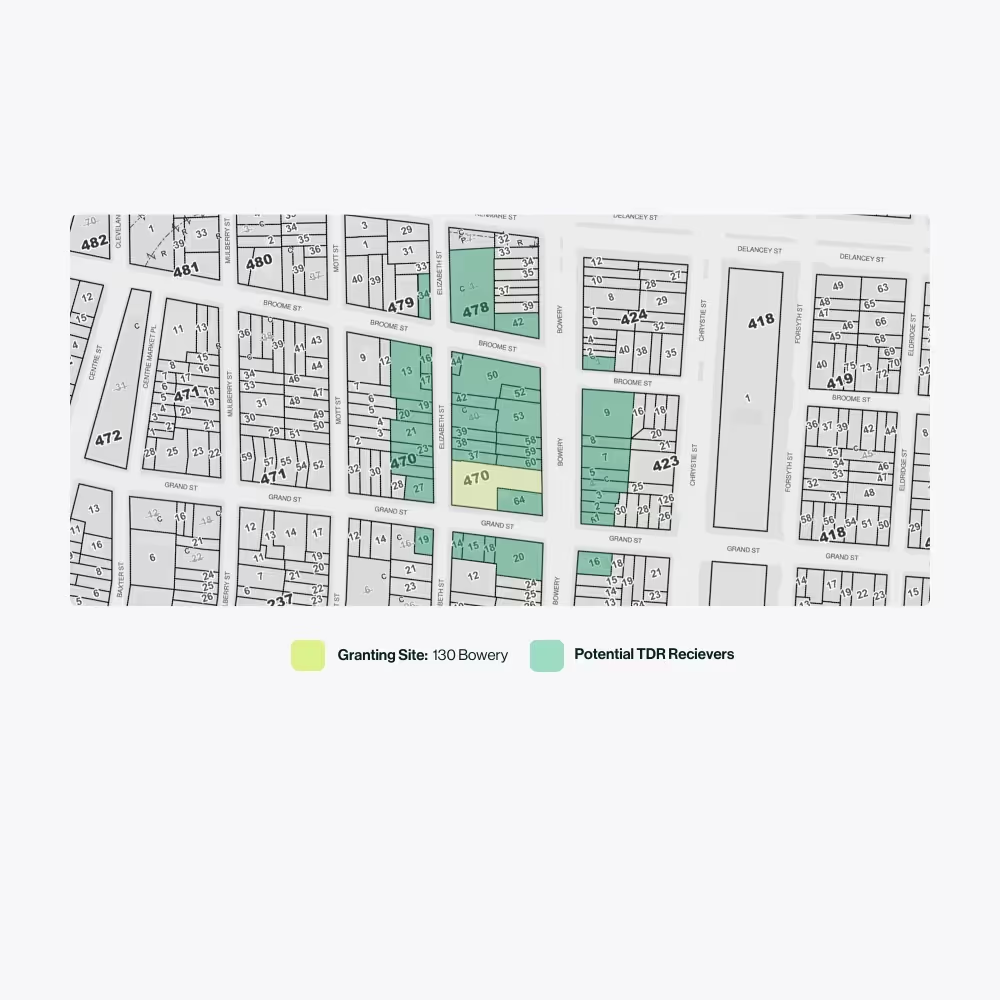
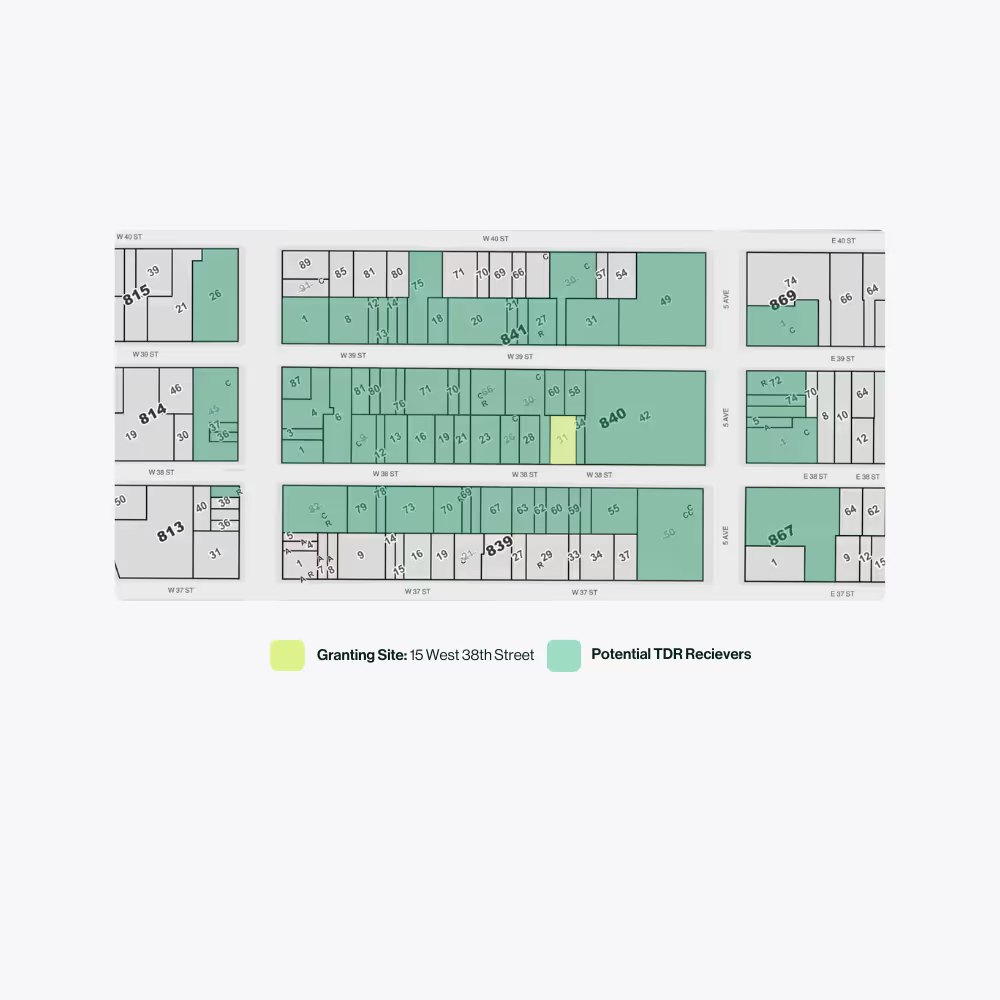
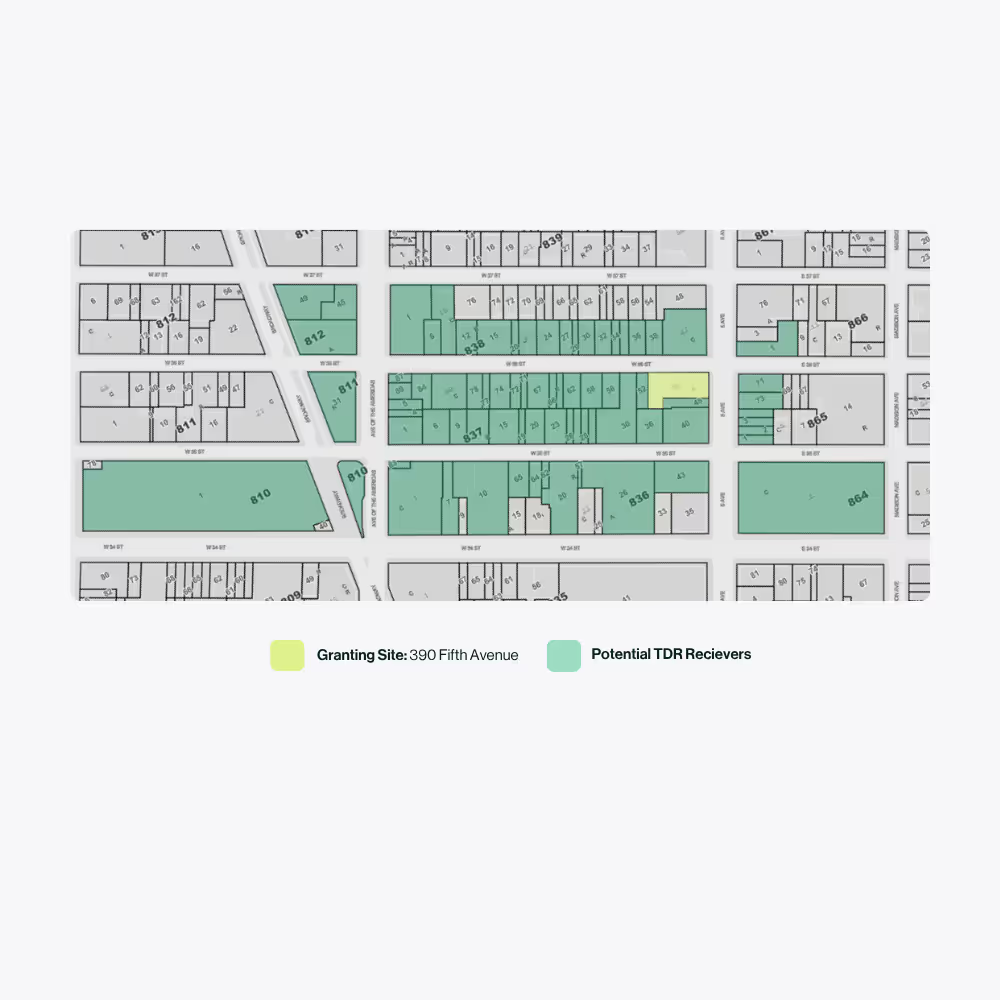
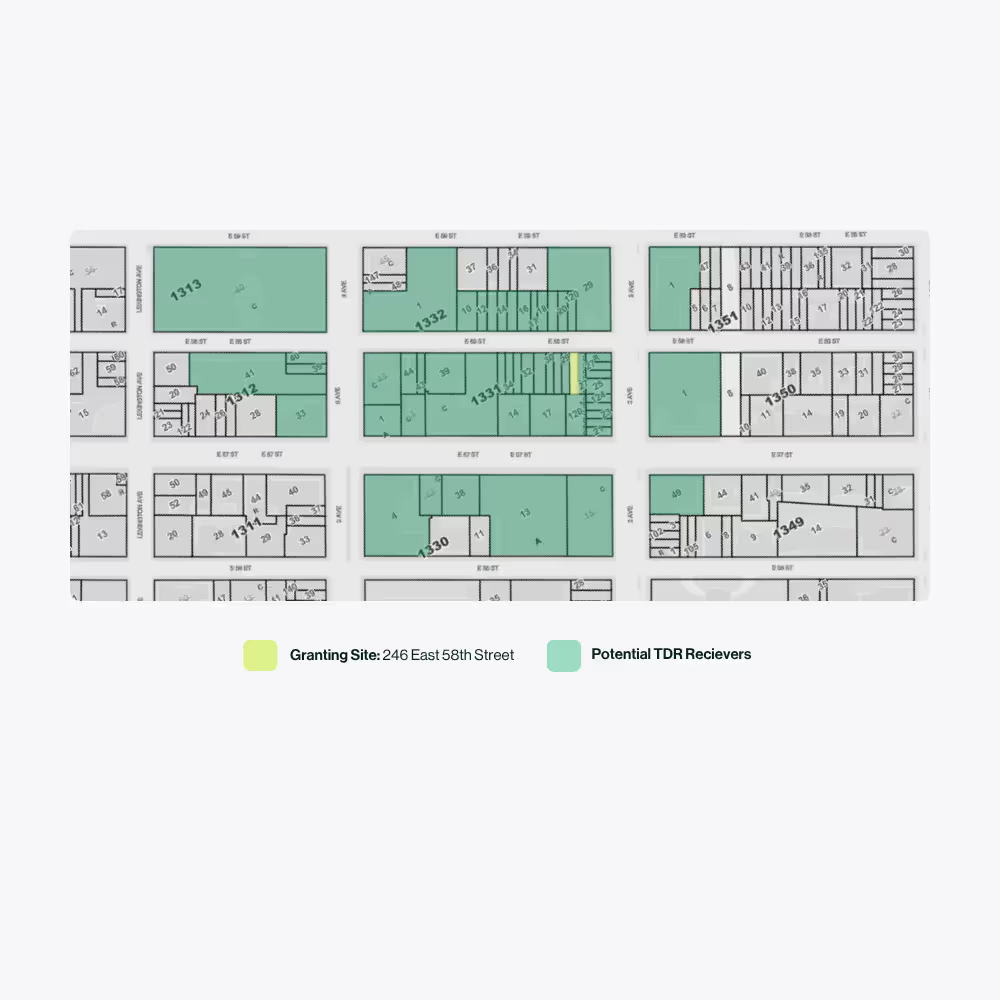
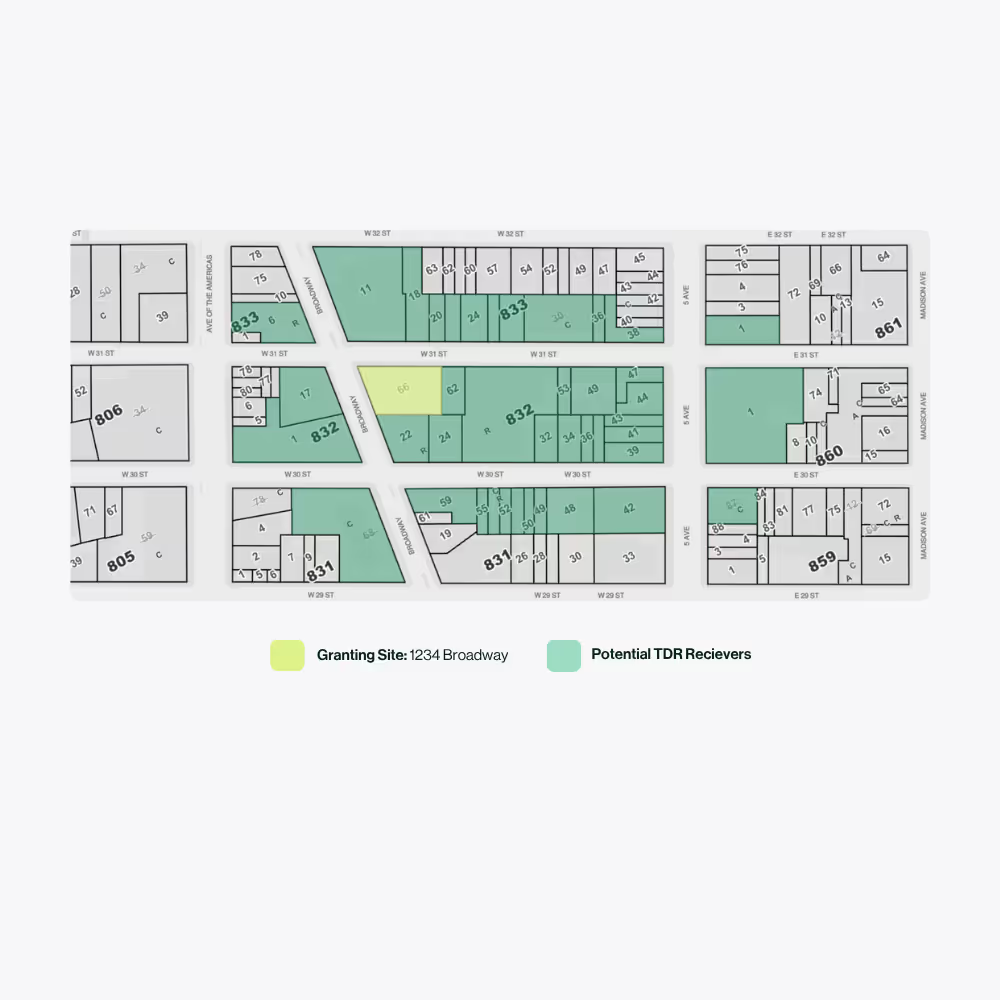
The City of Yes plan significantly expanded which lots could receive the rights. Landmarked buildings can now transfer development rights to lots on the same block, across the street or at the next intersection.
“You’re much more likely to transact if you have 52 potential buyers than if you have two,” Knakal said.
For brokers and lawyers, interest in air rights deals has swelled. Most of the deals brokers anticipate are in Manhattan, which has a high concentration of landmarked buildings. There are 1220 landmarked buildings and sites in the borough, according to the Landmarks Preservation Commission, compared to just 294 in Brooklyn with the second-highest concentration. Air rights typically sell for about half of what the land is worth, Knakal said, meaning that in areas where land values are lower, owners may not feel it worth the trouble to sell.
The City of Yes plan loosened zoning regulations in other ways, such as raising height limits in some parts of the city. Those changes have also encouraged owners to seek out air rights deals, Power said, because they are now permitted to build higher.
Part of the motivation behind the policy changes was to help owners of landmark buildings raise money to maintain them.
“Those landmarks can’t do anything with those air rights,” said Wilson Parry, CEO and co-founder at Property Scout. “It’s like found money for them.”
Another goal of making air rights transfers easier was to encourage housing density and development, as the mayor aims to build a moonshot 500,000 new units by 2032. The City of Yes plan overall is expected to create about 82,000 of those.
Brokers and lawyers said many deals are in the works, but none have closed. It may take some time for developers to seize upon the new rules and for the owners of landmarked buildings to learn about their new opportunities.
“A lot of times you don’t need the development rights until you’re in the process of building,” said Michael Smith, an attorney and partner at Herrick Feinstein. “You may be having conversations, you may be entering into contracts, but it hasn’t hit city records.”
The presence of retail leases and residential tenants can also hold up development, which in turn kicks air rights deals down the timeline. And there are still limitations on what you can build; receiving sites can only increase their density by 20 percent.
“The owners of landmarked buildings are anxious to sell and the developers are anxious to buy,” Power said. “It’s a matter of finding the right deal, the right time and the right business terms.”
Still, the process is much more streamlined than it once was. Although the city still needs to approve any transfers, there is no longer a need for a special permit and a lengthy process with the Landmarks Preservation Commission. Removing some of that uncertainty from the process has made it more attractive for both sides.
“Theoretically, City of Yes has definitely taken a good step forward for landmarks,” said Brian Strout, president and broker at TRIZ Advisory. ”Now it’s rolling up your sleeves to work through some of the practical realities.”




.avif)

BKREA Client Holiday Party


The Knakal Map Room was meticulously created through 220 hours of fieldwork during the pandemic, ensuring that BKREA has the most up-to-date pipeline of development projects. This pipeline, like all BKREA development site data sets, is disaggregated into five buckets: 1) residential rental, 2) residential condo, 3) hotel, 4) office and 5) miscellaneous (for everything not fitting into the first four buckets. Both pending and active development sites, as well as potential sites and possible assemblages are highlighted in different colors on The Map. The Map was originally created in the field in 2020 and, since then, BKREA has tracked every demolition permit, building permit and construction permit, and updated The Map accordingly. The massive 24-foot by 10-foot map details everything in Manhattan and is chock full of the most up to the minute data in the market. Today, The Map creates sensory overload for our visitors. The Map is color-coded with various colored highlights and post-its, marking everything from sold properties to available sites, and is categorized into the five main development buckets.
For all inquiries, reach out to your BKREA team member:

Get tailored industry and listing news, Map Room, and Bob Knakal's insights in your inbox!

Follow us on





.avif)




.avif)