

Read the Full Article on Commercial Observer - Click Here
For decades, the massive Kingsbridge Armory in the Bronx has stood largely vacant despite multiple redevelopment proposals. What could have become one of the borough’s largest economic engines instead became a powerful example of how policy decisions can derail private investment and job creation.
The collapse of a proposed retail redevelopment illustrates a broader lesson: when public policy ignores economic realities, projects simply do not happen.
The Kingsbridge Armory case demonstrates how economic feasibility drives development decisions. Developers, lenders, investors, and tenants must evaluate projects based on real financial constraints.
When regulations make projects economically impossible, investment does not adjust to accommodate them — it simply moves elsewhere. Effective policy requires collaboration between policymakers and market participants to ensure development projects remain financially viable while still meeting public goals.
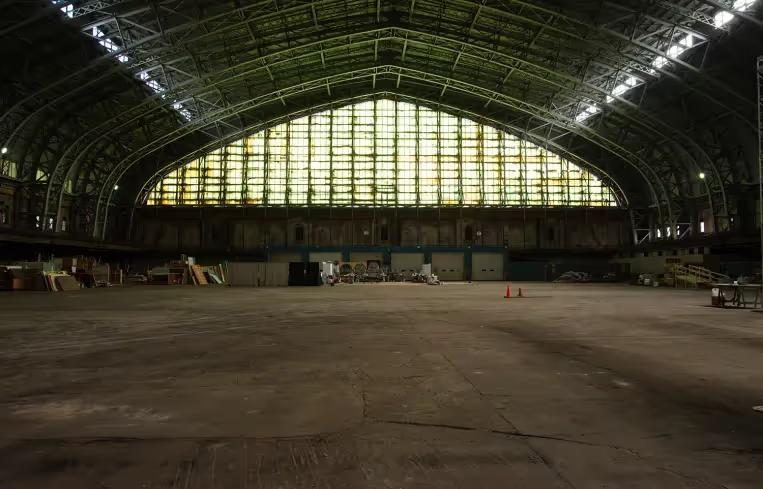
The Kingsbridge Armory is a massive historic structure in the Bronx that occupies an entire city block and has remained largely vacant for decades despite redevelopment proposals.
The Related Companies proposed converting the Armory into a major retail destination that would create thousands of jobs and generate significant tax revenue.
Mandated living wage requirements for all retail tenant employees significantly increased operating costs, making it difficult to attract retailers willing to lease space in the project.
The redevelopment was expected to create hundreds of construction jobs and thousands of permanent retail and service positions.
Yes. A later proposal suggested converting the Armory into a large ice sports complex, but that project also failed to materialize.
The case highlights the importance of aligning public policy with economic realities to ensure development projects remain feasible and capable of delivering jobs and investment.

Get tailored industry and listing news, Map Room, and Bob Knakal's insights in your inbox!

Follow us on


